News
OUR WORK IN ACTION

Navigating Local Law 97
New York City’s 2019 Climate Mobilization Act includes a goal to reduce overall carbon emissions by 80 percent by 2050, by 2030 an estimated 50,000 residential and commercial buildings will need to collectively cut their carbon emissions by 40 percent, and intermediate reductions begin in 2024.
New York City’s 2019 Climate Mobilization Act includes a goal to reduce overall carbon emissions by 80 percent by 2050. The City’s first big milestone arrives in 2030: by then, New York buildings will need to collectively cut their carbon emissions by 40 percent. Intermediate reductions begin in 2024.

Is my building subject to Local Law 97?
An estimated 50,000 residential and commercial buildings are subject to the carbon cap (measured in metric tons of carbon dioxide per square foot).
Buildings larger than 25,000 square feet in the 10 Building Code Occupancy Groups are regulated under this law. Generally, if your building is subject to NYC’s benchmarking law and you submit annual water and energy use, you are required to comply with Local Law 97.
A list of buildings subject to the benchmarking law can be found here (opens an Excel spreadsheet). Search for your building by its 10-digit Borough-Block-Lot (BBL) number.
Not sure of your BBL?
Find it on the NYC Department of Finance website.
Note
Mixed-use buildings have limits that reflect their specific percentage of occupancy groups.
Hospitals and income-limited units are regulated under a separate timeline.
How much carbon does my building emit now?
Visit Metered.nyc and enter your building’s BBL or the street address in the green search bar.
Once your building is located, scroll down to the green highlighted “GHG Emissions / sq. ft.” bar to view the carbon intensity for the building. This value depends on an emissions factor applied to each source of energy used (e.g., fuel oil, natural gas, electricity, district steam) based on its associated carbon pollution. Metered.nyc uses emission factors from EPA’s Portfolio Manager Tool.
You can calculate your building’s annual carbon emissions by multiplying the value in the green box by the building’s total area (square feet).
How much do I need to reduce my building’s carbon emissions?


High time for high performance
Local Law 97, or the Building Emissions Law, is the cornerstone of New York City’s Climate Mobilization Act. It’s one of the most ambitious climate change laws on the books.
The law
Last year the New York City Council passed a package of laws called The Climate Mobilization Act. The package of laws includes items relating to financing, renewable energy generation and storage, and green roofs.
Local Law 97, otherwise known as the Building Emissions Law, is the cornerstone of the groundbreaking legislation. Buildings contribute nearly 70 percent of NYC’s carbon emissions, and they’re responsible for about 95 percent of electricity use in the city, much of which is used for heating and cooling.
Go big or go home
The City’s goal is to reduce overall carbon emissions by 80 percent by 2050. It’s one of the most ambitious climate change laws on the books. The City’s first big milestone arrives in 2030: by then, New York buildings will need to collectively cut their carbon emissions by 40 percent. Intermediate reductions begin in 2024.
An estimated 50,000 residential and commercial buildings are subject to a carbon cap, or intensity limit (measured in metric tons of carbon dioxide per square foot). Buildings larger than 25,000 square feet in the 10 Building Code Occupancy Groups are regulated under the law. Mixed-use buildings have limits that reflect their specific percentage of occupancy groups. Income-limited units and hospitals are regulated differently with a separate timeline.
Unlike many other cities with climate change laws, the carbon caps are enforceable in New York City. Building owners will be levied fines of $268 for every ton of carbon dioxide over their cap. Go one ton over, and it’s a nominal fee. But some of the city’s biggest carbon emitters could face penalties of $1 million or more if they don’t comply with the new regulations. Skipping required reporting will also result in hefty monthly fines.

Where the rubber meets the road
Initial carbon savings can be achieved through operational and controls changes. Urban Green estimates those adjustments will require an investment of $1.75- to $2.7-billion.
However, the vast majority of carbon savings will come from infrastructure retrofits to the tune of $14.8- to $21.6-billion.
Windows can be a big part of that savings equation. There’s a reason the Empire State Building built a temporary window factory onsite to retrofit 6,514 double-hung windows with high performance models ten years ago. That move reduced energy costs for the iconic Art Deco landmark by more than $400,000 per year.
Broken, single pane, or even older replacement windows can be swapped out for high performance units that utilize low-e coatings to reduce thermal gain or argon-filled panes to improve the insulating capacity. Not only does this save carbon emissions, but it saves on heating and cooling bills and improves occupant comfort.
The Climate Mobilization Act recognizes the immense financial investment required to reduce the City’s carbon footprint. It included a Property Assessed Clean Energy (PACE) financing tool to offer building owners up to 100 percent funding for energy efficiency and renewable energy projects. The PACE loan has low interest rates, repayment terms of 30 years, and little to no upfront costs. The loans are repaid through the property’s tax bill, do not balloon, and remain with the building upon sale.
Modern materials and technologies mean that retrofitting or replacing windows doesn’t mean sacrificing aesthetics. Historical Windows has a deep stable of high performance windows and doors for new construction, Landmark, and contemporary projects.


Leading the Way with Virtual Reality
We are excited to announce that we’re leading the architectural window and door industry by deploying virtual reality in the design process.
We are excited to announce that we’re leading the architectural window and door industry by deploying virtual reality in the design process.
Virtual reality immerses our clients in their projects in a transformative manner, going a step beyond the typical 3-D model. It allows architects and designers, developers, and other professionals in the building and construction sector to safely and efficiently explore conceptual options like exterior colors, window and door styles, glass types, and landmark profiles and projections.
The concepts are easily presented to customers using a virtual reality headset or video, streamlining the design process while fostering transparency, client trust, and social distancing. Building owners, interior designers, public agencies, and other stakeholders can better understand spatial and neighborhood impacts, improving engagement and approval process without the added time and expense of models and mock-ups.
It's not just for landmark projects, either. With VR, clients will see that you don’t have to sacrifice aesthetics for energy efficiency.


Historical Windows and Caoba Doors Announce Exclusive Partnership
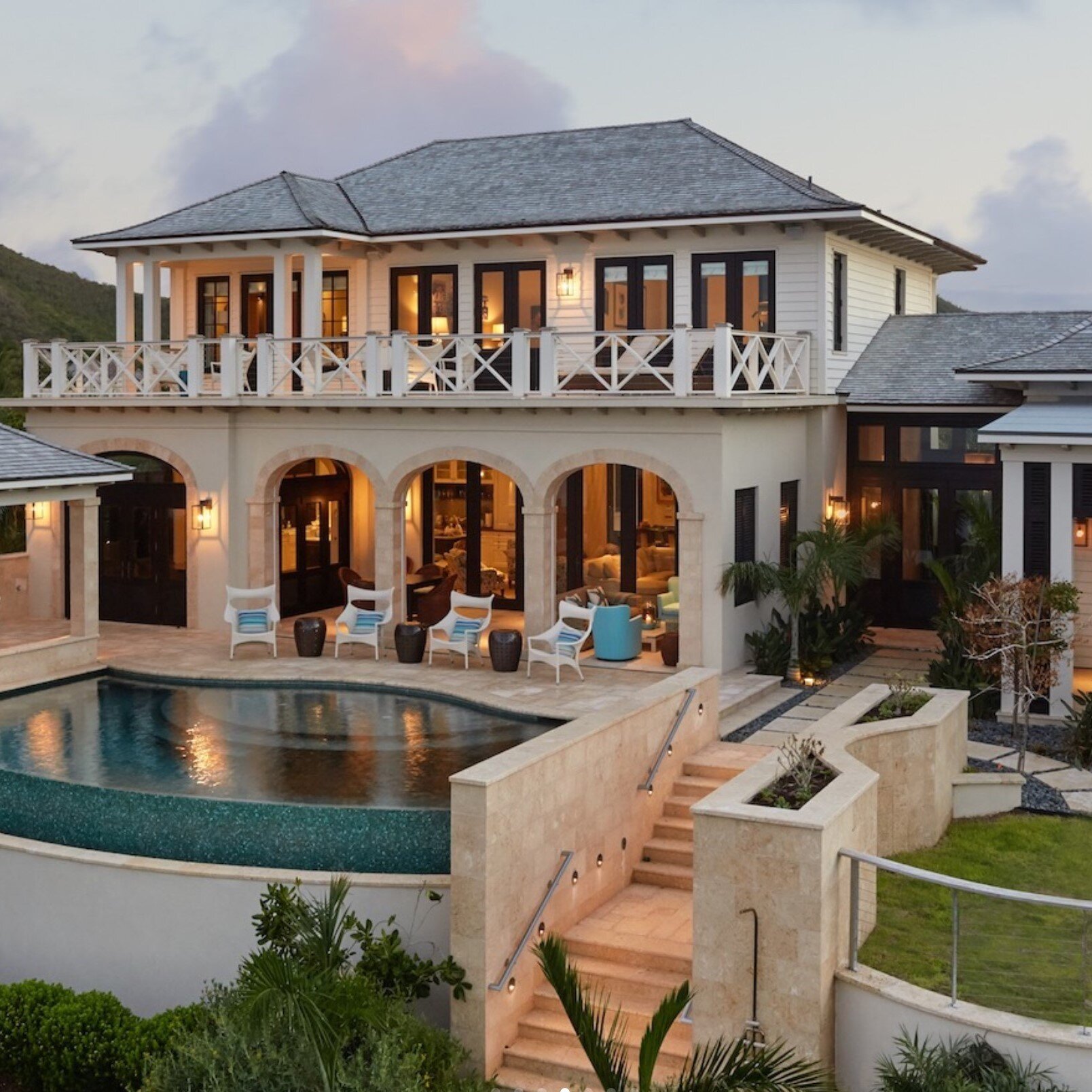
Historical Windows is proud to announce an exclusive partnership with Caoba Doors in Antigua, Guatemala.
We’re proud to announce an exclusive partnership with Caoba Doors in Antigua, Guatemala.
Steeped in the craftsmanship of Central America for more than 35 years, Caoba prides themselves on the quality of their product and their workforce—the largest and best compensated in the region.
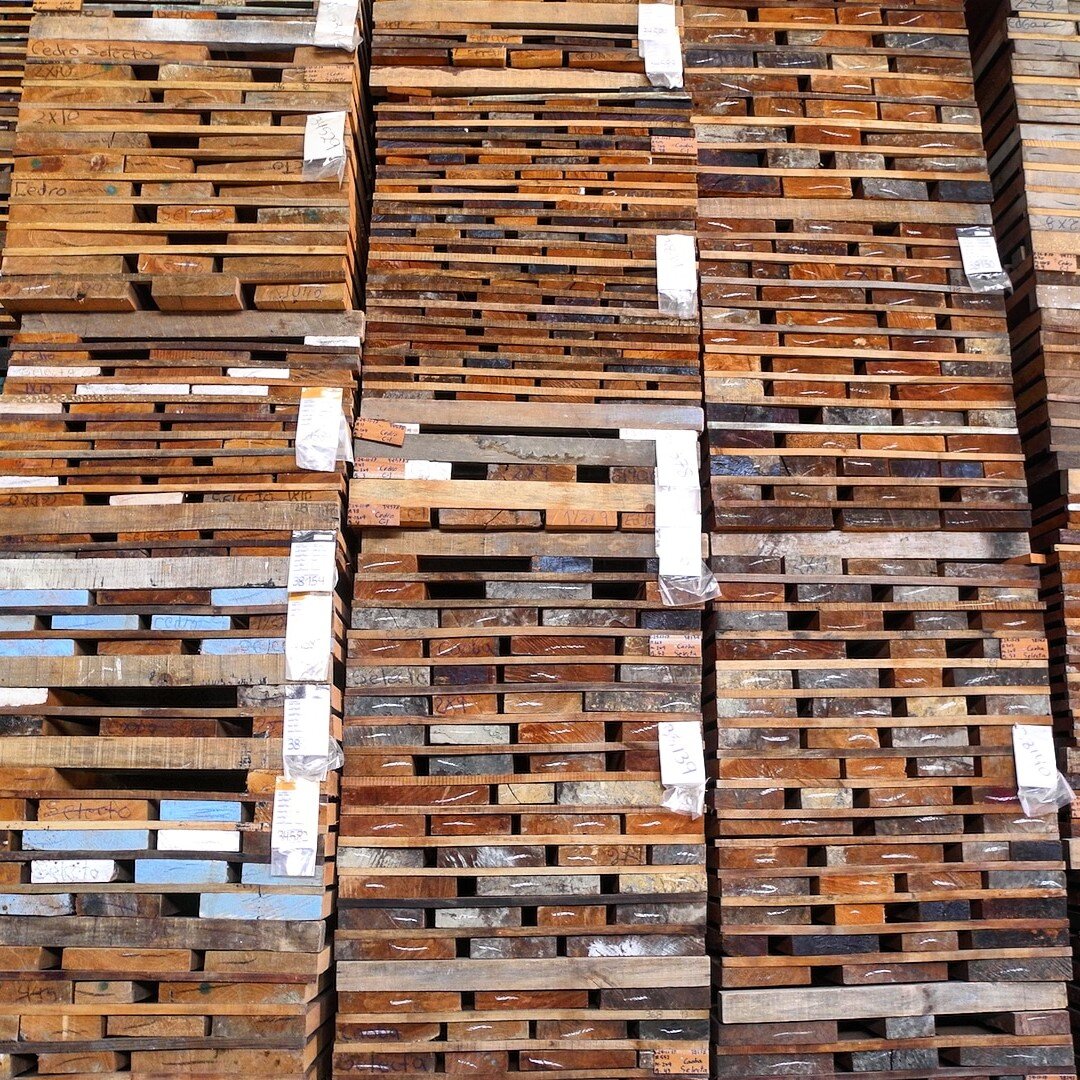
Caoba’s windows, doors, and millwork are custom designed for each client—down to the size and shape, wood species and finish, hardware, and glass. They offer a truly bespoke product that starts in their more than a million board foot lumber storage, moves to their 180,000 square foot state of the art manufacturing plant, and ends with hand-applied finishing. Their work includes the US Treasury Building in Washington, DC and the Staten Island Borough Hall and Beekman Hotel in New York City.
Custom is their standard.


Historical Windows Partners with Norwood Windows & Doors
Historical Windows is proud to announce a new partnership with Norwood Windows and Doors. Norwood specializes in custom, finely crafted high performance windows and doors made from sustainable lumber.

Norwood is a family-owned Canadian window and door manufacturer, specializing in finely crafted and custom wood products. With their commitment to using only the finest materials and building to exacting standards, Historical Windows is excited to add Norwood to our roster of partners.
Norwood’s windows and doors are made of only sustainably harvested lumber and offer many high performance products that meet or exceed Energy Star requirements. They recycle all paper and cardboard waste, and sawdust and wood scraps that cannot be used in their premium products are used to heat their dry lumber kilns and New Brunswick manufacturing facility.
Norwood. Never ordinary.


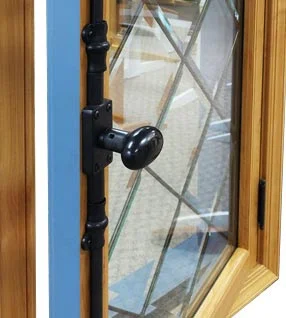
Inswing Casement - Cremone Bolt & Decorative Glass
This inswing casement by Parrett Windows combine truly historical cremone bolt operating hardware along with non-adjustable butt hinges featuring decorative ball tip finials.
This inswing casement by Parrett Windows combine truly historical cremone bolt operating hardware along with non-adjustable butt hinges featuring decorative ball tip finials. The traditional sash profile of this unit makes it a perfect fit for historical replication projects.
The triple pane decorative glass combined the historic appearance of single pane leaded glass with the enhanced weather performance and easy cleanability of modern insulated glass. Low E coatings can also be added to this decorative glass to further the unit’s thermal performance.