

News
OUR WORK IN ACTION

What Does Landmark Window Mean?
Often when talking about our projects, we’ll use the term NYC landmark windows. However, what a landmark window is isn’t normally explained. Working on these projects is part of our every day, so we decided to fully explain what a Landmark window is.
Often when talking about our projects, we’ll use the term NYC landmark windows. However, what a landmark window is isn’t normally explained. Working on these projects is part of our every day, so we decided to fully explain what a Landmark window is.
What is a landmark window?
A landmark window is a window inside either a designated landmark building or designated historic site.
What is a designated landmark building or historic site?
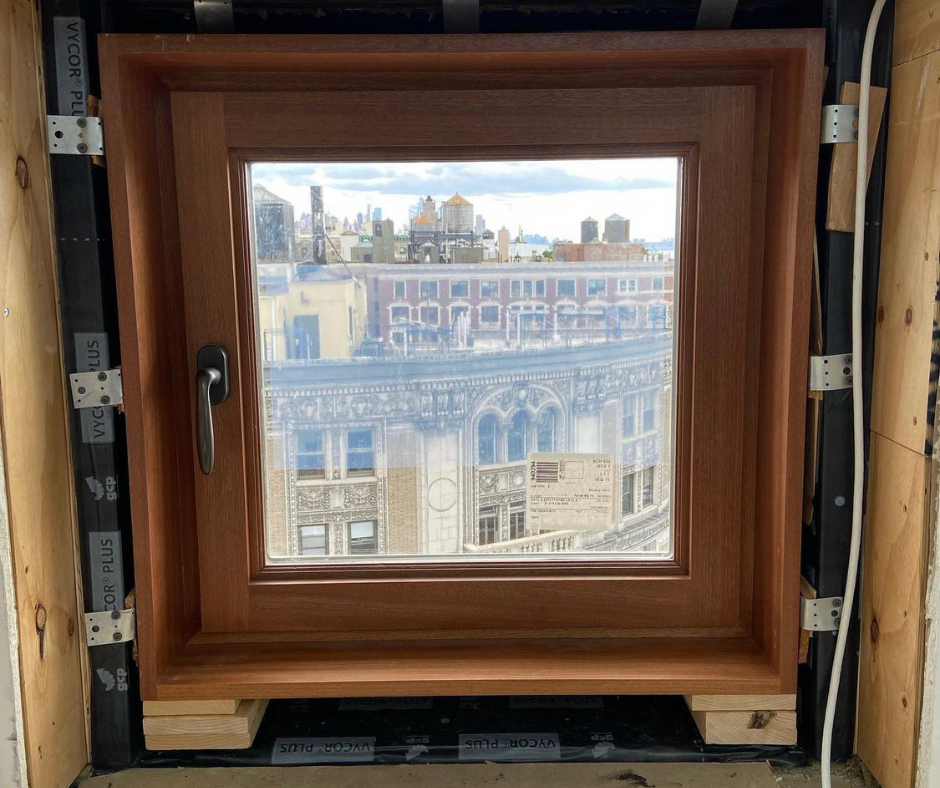
A landmark building or historic site is a building or neighborhood that has been designated by the Landmarks Preservation Committee to be architecturally, historically, or culturally significant to the City of New York.
What is the Landmarks Preservation Committee?
The Landmarks Preservation Committee (LPC) is a municipal preservation agency responsible for protecting New York City's architecturally, historically, and culturally significant buildings and sites and regulating them after designation. It was created in 1965 as a result of the signing of the Landmark Law by Mayor Robert F. Wagner after the city suffered losses of historically significant buildings.
The agency is made up of a panel of 11 commissioners appointed by the Mayor of New York. The panelists are supported by a staff of approximately 80 preservationists, researchers, architects, historians, attorneys, archaeologists, and administrative employees.
How does the LPC determine if a building or site is landmark/historic?
Potential landmarks and historic districts are identified through surveys and other Commission-initiated research. This may include properties suggested by members of the public through Requests for Evaluation.
What is the landmark law?

The landmark law is an order to protect historic landmarks and neighborhoods from precipitate decisions to destroy or fundamentally alter their character.
According to the law, the purpose of safeguarding these buildings and places is to:
• Stabilize and improve property values
• Foster civic pride
• Protect and enhance the City's attractions to tourists
• Strengthen the economy of the City
• Promote the use of historic districts, landmarks, interior landmarks, and scenic landmarks for the education, pleasure and welfare of the people of the City.
What does this mean for construction/repairs on designated buildings?
If a designated building or site is undergoing alterations, demolition, and or new construction, the LPC must review any proposed changes and determine whether the “special qualities” of the designated buildings are not compromised or destroyed.
How many designated buildings and sites are there?
There are more than 37,600 landmark properties in New York City. In addition there are 152 historic districts and historic district extensions throughout Manhattan, the Bronx, Queens, Brooklyn and Staten Island. Within this number of protected sites are 1,445 individual landmarks, 121 interior landmarks and 11 scenic landmarks.

The Pieter Claesen Wyckoff House, part of which is the oldest structure in New York State (c. 1652), was the Commission's 1st designation on October 14, 1965.
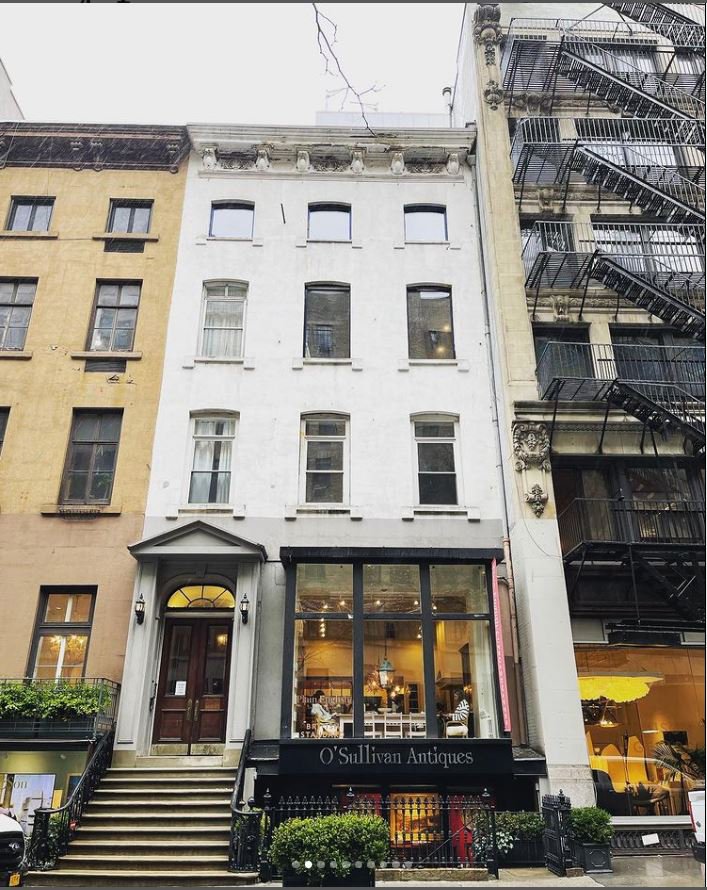
Recent HWNY Project Former Home of Famed Chinese Artist
Historical Windows of New York was recently busy installing Aluminum Clad European triple pane high-performance Passive House Tilt and Turn Windows into the south facing apartments at 51 East 10th Street in Greenwich Village.
Historical Windows of New York was recently busy installing Aluminum Clad European triple pane high-performance Passive House Tilt and Turn Windows into the south facing apartments at 51 East 10th Street in Greenwich Village. This window install was the first of its kind on this particular NYC block in a building that housed one of its most famous tenants during the Depression, famed artist, poet, philanthropist, teacher, writer, and inventor Yun Gee.

Gee, widely considered one of the great modernist avant-garde painters, lived in the building and taught art classes. He also wrote about his theory of Diamondism here, a set of art principles that bring together the spiritual, intellectual, and practical aspects of painting.
Gee was most famous for becoming the first Chinese born artist invited to join the Société des Artistes Indépendants and was also the first Chinese artist to display his work internationally. He was the first Chinese artist to show at the Museum of Modern Art (MoMa) as well as the first Chinese artist to show in the salons of Paris.
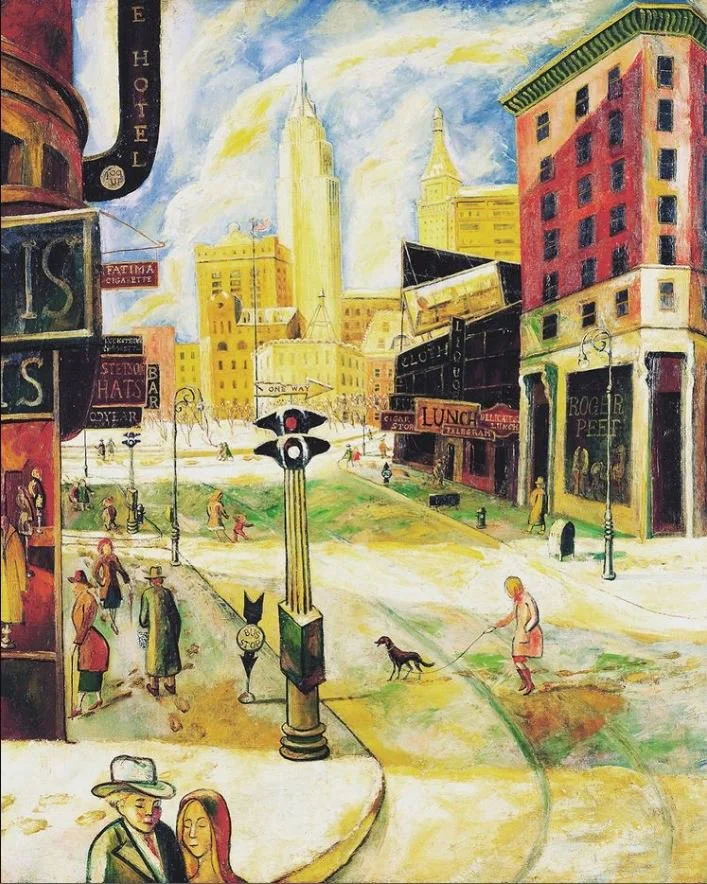

Sustainable Lumber Harvesting Part of Allen-Stevenson Project
We were able to find a perfect match with Parrett’s long-lasting windows for a townhouse project we recently worked on in the Upper East Side at the Allen-Stevenson School.
We were able to find a perfect match with Parrett’s long lasting windows for a townhouse project we recently worked on in the Upper East Side at the Allen-Stevenson School. Two beautiful and historic facades on the front of the school were restored along with the addition of a modern state of the art school facility inside.

To provide a smooth and secure locking method, four operable French inswing casements were made from solid brass with multipoint-locking handle sets and matching adjustable hinges were used that will provide years of functionality.

Stationary, double hung windows, made of Mahogany, were constructed in both rectangular and arch top “variation 6” shapes. These windows were also chosen to be made entirely from FSC Pure lumber sources, which ensures all harvesting is done in a sustainable and ethical manner. To ensure the appearance of a smooth finish and reduce wood grain, a 1-3 coat ratio of primer to paint was then applied in the factory with a custom-specified coating.
Low iron Starphire glass was used with a low E glass makeup. This minimizes the ultraviolet and infrared light that can pass through glass without reducing the amount of visible light that is transmitted. When the glass then absorbs either heat or light energy, it is either blown away by moving air or re-radiated by the glass surface. In addition, an argon gas fill gave the windows optimal thermal performance.


Benefits of Copper As a Building Material
Did you know copper is one of the best building materials?
In regards to durability, cost effectiveness, health benefits and sustainability, it’s hard to find a better option than copper.
Did you know copper is one of the best building materials?
In regards to durability, cost effectiveness, health benefits and sustainability, it’s hard to find a better option than copper.
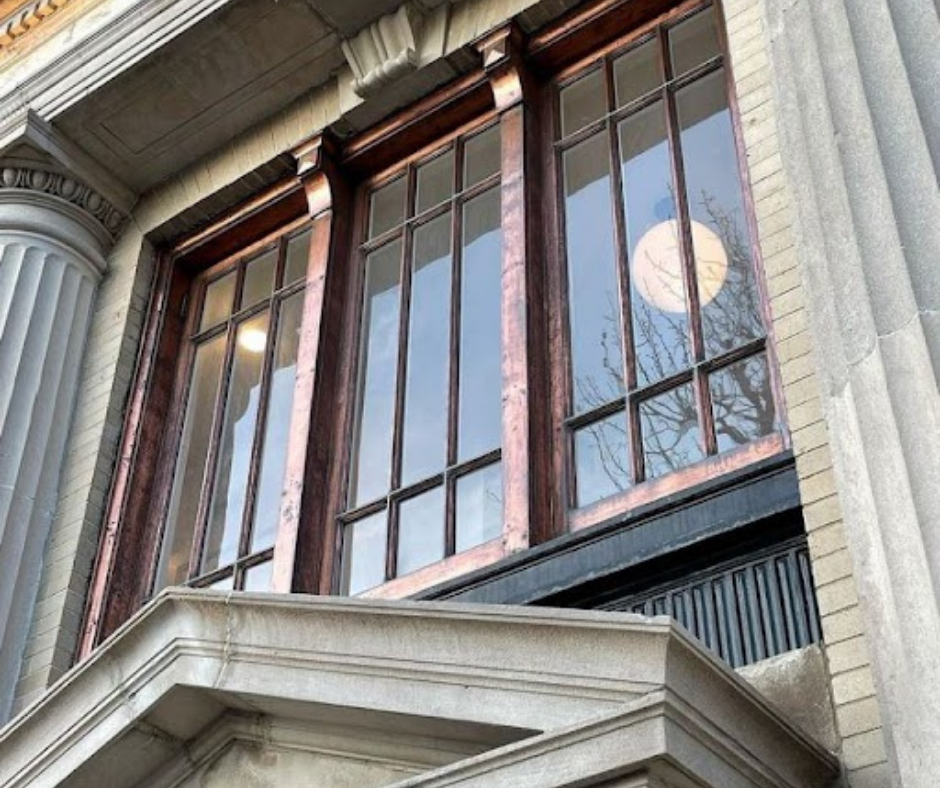
Durability:
Due to the metal developing a protective patina as it undergoes its natural oxidization process, copper is more durable as it resists corrosion over time. With this, it has become one of the most preferred metals for builders; roofing, siding, windows, doors, flashing, gutters, leaders and piping.
In addition to avoiding corrosion, copper is one of the more durable building materials because of its density. While sheet metal generally provides better coverage for more roof types and better water resistance, copper is less dense than lead which makes it easier to support structurally. It also has a greater tensile strength than most other materials, which makes it easier to install on steeply pitched roofs, such as domes (hence the number of older historical buildings with copper domes/roofs). Copper also has a much higher melting point than most other materials, giving it a greater fire resistance.

Cost Effectiveness:
While the initial price often makes it seem like a premium material, copper’s durability, ease of maintenance and salvage value makes it one of the more cost effective options, considerably cheaper than lead, slate and handmade clay tiles. In addition, recent technology and growing interest in building with copper, has made the material more cost-effective as contractors are now more familiar with using copper in mechanized seaming, prefabrication and other cost-saving techniques.

Health Benefits:
Healthcare Acquired Infections (HAIs) are a growing problem worldwide. However, building with copper and using copper surfaces for hospital fixtures could help reduce HAIs. Prior research has shown antimicrobial copper surfaces can kill up to 83% of the bacteria that causes HAIs and can also eliminate drug-resistant strains.
Sustainability:
As mentioned before, copper is more durable, requires less maintenance or replacement and is recyclable. It’s longevity lessens the need to use new materials, preventing waste and decreasing the energy required for constant maintenance. Since it is also a very reusable product, copper has minimal impact on natural resources. It is the standard for environmentally sound wiring, plumbing and is an important component of high-performing technologies, allowing it to have a positive impact on energy efficiency.

Windows and Hidden Symbolism in The Statue of Liberty
Windows are markers of time. Sometimes overlooked, we tend to ignore the ornate details in both glass and the casing. These details can give us insight into the moment in time, the artist, and the occupants.
Windows are markers of time. Sometimes overlooked, we tend to ignore the ornate details in both glass and the casing. These details can give us insight into the moment in time, the artist, and the occupants.
The Statue of Liberty is one of the biggest examples of how windows can give us insight into such things. With windows that were intentionally designed to symbolize specific ideologies, we can see inside the creator’s head and interpret his thoughts in this light.
Since 1886, the Statue of Liberty has been a symbol of freedom and hope for people from around the world, a sign that new opportunities lie just around the corner. The interesting thing about the statue is symbolism is also used within the designs of the individual parts of the statue. Since this is less talked about than that of the statue as a whole, it is not as well known and thus is one of the many “secrets” the statue still holds even after 135 years.
Conceived in the 1860’s by French antislavery activist Édouard de Laboulaye and later brought to life by sculptor Frédéric Auguste Bartholdi, the statue was originally created to represent an alliance between America and France. An alliance that represented freedom and liberty for all people around the world.

Atop Lady Liberty’s head sits a crown, inside the crown are 25 windows. Each window represents one of the 25 gemstones found on Earth:
Garnet
Amethyst
Aquamarine
Jade
Diamond
Emerald
Alexandrite
Pearl
Moonstone
Ruby
peridot
Spinel
Sapphire
Lapis lazuli
Opal
Rubellite
Topaz
Citrine
Tanzanite
Turquoise
Zircon
Shiny lemon stone
Morganite gemstone
Onyx gemstone
Paraiba tourmaline
Each stone is represented by a separate pane of glass that overlooks the water and watches all the boats/people coming and going.

Atop the crown sit seven “rays”. Just as the windows represent the gemstones of Earth, the seven rays represent the seven seas (Artic, North Atlantic, South Atlantic, North Pacific, South Pacific, Indian and Southern) and the seven continents (Africa, Antarctica, Asia, Australia, Europe, North America and South America) of the world.

In her hand, the statue holds symbolism within the torch. This torch, which “lights the path for all those who come to America” was created to symbolize freedom and enlightenment, aligning the individual message with the statue as a whole.
Whether it is a pane of glass in representation of earth’s jewels, or they are curved to illuminate on water, windows carry much representation through history. We’re proud to be part of a city with such historic symbolism. For more information and interesting tidbits visit: https://adventure.howstuffworks.com/20-facts-about-the-statue-of-liberty.htm.

Is it a "Brownstone" or is it a Townhouse?
A brownstone is a type of townhouse constructed from a brown sandstone…It comes in varying shades or hues from brown to red, with the trademark color coming from a high amount of iron in the stone.
A brownstone is a type of townhouse constructed from a brown sandstone that is used to build these types of homes. It comes in varying shades or hues from brown to red, with the trademark color coming from a high amount of iron in the stone.
A townhouse can be built of any material. If it is made of brick (or primarily brick) then it is a townhouse, not a brownstone. Over the years, the term "brownstone" has become accepted to include almost any city row house but the widespread use of the term is technically incorrect. If the building is not made of or fronted with brownstone, then the house is not a brownstone it is a townhouse or a row house.
In other words, brownstones are townhouses but not all townhouses are brownstones.
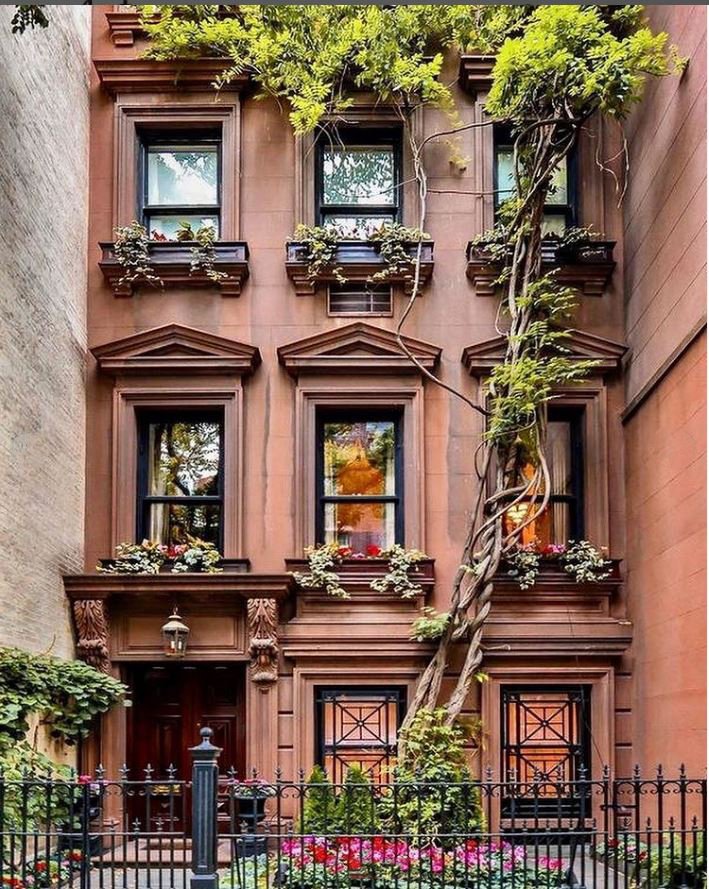
Brownstone townhomes first popped up in New York City in the early 19th century and are typically a city row house three to four stories tall with the primary street façade clad in sandstone. They were built for the burgeoning middle class with the sandstone usually being quarried in nearby Pennsylvania, Connecticut and New Jersey as a cheaper alternative to marble or limestone. In fact, many of the earlier row houses have only a brownstone façade, the rest of the structure is brick, while later more ornate and expensive houses are made entirely of the sandstone.
These townhomes were considered less desirable by the affluent until the mid-nineteenth century, when the Romantic Movement ushered in a taste for dark materials. Improvements in mining made newly stylish brownstone more affordable and by the 1860's it was the building stone of choice.
Today, the majority of brownstones can be found throughout the Manhattan and Brooklyn burrows of New York City as well as in Hoboken and Jersey City.
Architects like Benjamin Driesler and Theobald Engelhardt are synonymous with promoting not just the field of architecture but also creating neighborhoods that are still looked at as some of the most beautiful in the city more than 100 years later.
In other parts of the country there are similar names for townhomes built from stone. Around Chicago, these buildings are referred to as greystones because the homes are built from limestone or marble quarried in neighboring Indiana. These buildings were constructed for a variety of classes, from the working class to the wealthy and were almost always designed as two, three, or four family homes. Many of these still remain as multi-family dwellings today.

However, unlike the greystones in Chicago, a good deal of the brownstones and greystones in New York have been converted into multiple-family apartment homes over the years. Although this trend has reversed in recent years to reestablish these structures as single family homes. Also many of these greystone buildings (townhomes) were mansions built in the Gilded Age for and by the wealthy upper class of New York.
The style of the facades is one of the main differences between brownstones and greystones. While brownstones built between 1830-40 typically feature Italianate details, while the greystones built later in the 1900's are often Romanesque or Neoclassical.
In addition there are also examples of greystones built through the 1930s that were also built along the Neoclassical, Beaux Arts, and Chateauesque styles. Similarly, brownstones were not only built in the Italianate style with some of the later examples, especially in Manhattan's Upper West Side, stretch into the Queen Anne, Beaux Arts, and even Romanesque varieties.
The most notable difference between the two is that the greystone is more commonly a semi-detached or fully detached townhouse, while the brownstone is almost always attached - a row house - one that immediately adjoins the neighboring building to create a solid street façade.
The sides, rear, and front of these structures, in other words, the structural walls, are typically brick. The stone is a veneer which is attached to the front brick wall with metal ties, while foundations were constructed of local schist. The upper floors, besides being faced with brick or stone, commonly had window sills, lintels, door surrounds, and stoops made of the stone.

Unquarried brownstone is horizontally oriented but since the stone looks better when it’s set vertically, that was how it was placed during construction. This however, was then the reason many facades began to prematurely deteriorate and spall (flake off) because this secondary grain of the sandstone was not a strong as the primary grain. Greystone facades didn’t have the issue because the secondary grains of the lime stone or marble were stronger.
One of the most distinctive features of a classic New York brownstones is its stoop, a word appropriated from “stoep”, the Dutch word for “stair.” The Dutch built stoops to raise their parlor floor above flood waters. Some surmise that the New York stoops were built to rise above the daily sights, sounds, and smells of horse manure, muck, grime, creaking carriage wheels, clomping horse hooves, and splattered mud.
Walk down many streets in Manhattan's Upper West Side or Brooklyn's Carroll Gardens, and you'll know exactly what we mean. Despite their similarities, brownstone and greystones are distinct variations on a theme, more architectural cousins than siblings.
Needless to say, we love these wonderful buildings equally and enjoy working to preserve and enhance them.
